
Oklahoma Corrections Releases from Wagoner
Wagoner County Jail is not an ODOC prison. A felony defendant can leave the county jail for ODOC reception, transport, or placement. WCSO may record that local booking as released because county custody ended. The person can still be incarcerated. ODOC Offender Lookup is the next system to check when the court judgment, VINE message, or county release entry points to state custody.
A person later paroled from an ODOC institution has left prison for conditional community supervision. A discharge represents a different legal endpoint. Prison release can also lead to a detainer or another custodian. The county release card, ODOC record, Board action, court judgment, and supervision office answer separate questions and should not be collapsed into one result.
| Event | What it proves | Next source |
|---|---|---|
| WCSO transfer to ODOC | County custody ended | ODOC lookup and judgment |
| ODOC parole status | Conditional community supervision | Board result and field office |
| ODOC discharge | End point shown by the state record | Discharge record and court file |
| ODOC facility status | State custody continues | Current institution record |
No Wagoner County ODOC Prison
No official facility directory reviewed identified an ODOC institution physically inside Wagoner County. That absence is important. Do not substitute a nearby prison from another county or claim that the Wagoner County Jail is a state facility. ODOC institutions statewide serve people whose cases began in Wagoner, and the assigned facility can change through reception, classification, medical needs, security level, programming, or transfer.
The location in a public state record should therefore control. If an ODOC result names a facility, use that institution's official contact path. If the record shows parole or probation, use Probation and Parole Services. If it shows discharge, request the state-system record needed to verify the actual endpoint. County geography alone cannot identify the right prison records office.
Note: No local ODOC prison was found, but Wagoner County cases can still lead to custody anywhere in the state system.
Confirm an Oklahoma Corrections Release
Search with the ODOC number whenever known. A name-only result can join the wrong person to a Wagoner case, especially when names are common. Compare identifiers, aliases, physical descriptors, photograph when displayed, sentence and case information, status, and location. Record the accessed date because live corrections information can change.
- Open the official ODOC Offender Lookup and enter the DOC number or name.
- Review all candidates and open the detail record that matches the Wagoner County case.
- Read the current status and facility together. Active incarceration means the county transfer did not become community release.
- Separate actual parole or discharge wording from a projected or tentative date.
- When parole appears, compare the Board result and confirm the assigned supervision office.
- When discharge appears, use the judgment and ODOC record request to identify which sentence ended.
The official ODOC interface displays the state search fields used to begin a matched release inquiry.
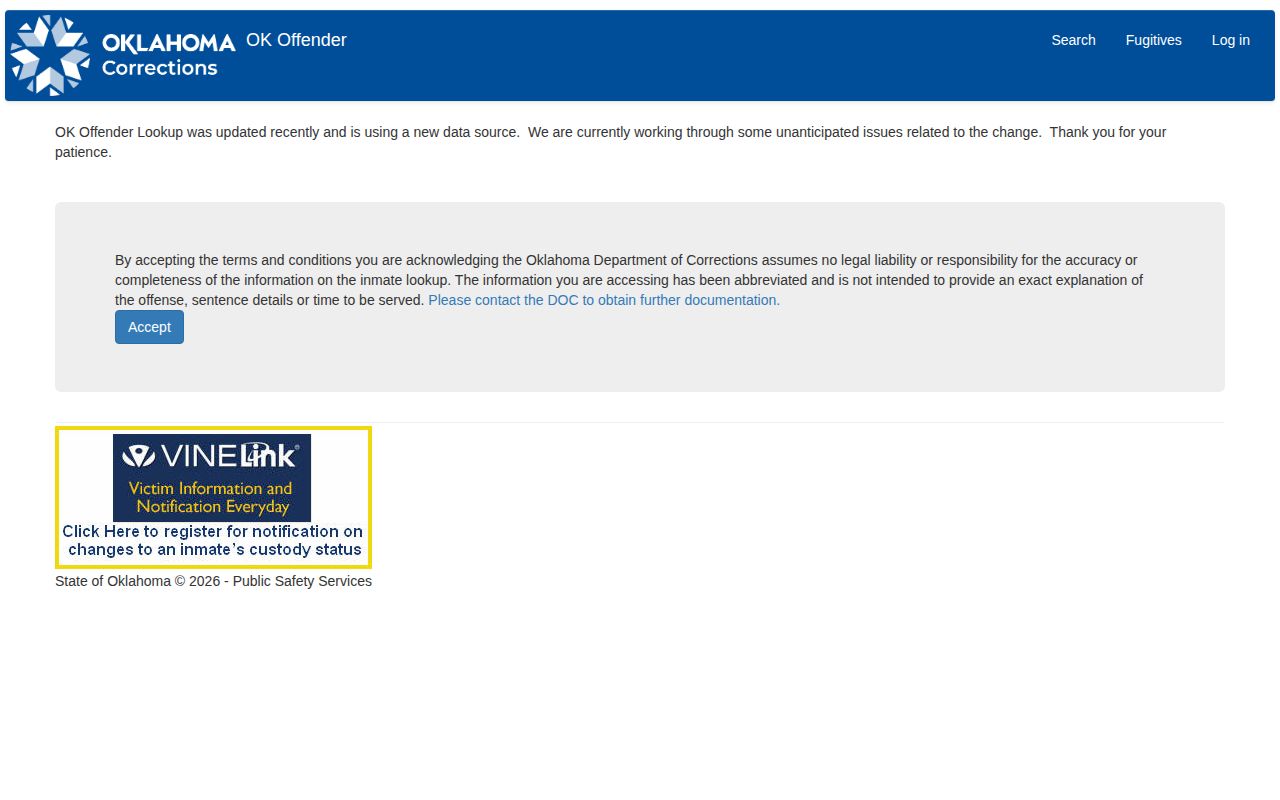
The interface supports a careful identity match. Not every public result contains every field, so describe only what the matched live record displays. A precise match protects the integrity of every later release conclusion.
Oklahoma Corrections Projected Release Limits
A projected date is not an executed release. Credits may be earned, lost, restored, or changed by class. Jail-credit corrections, court orders, additional sentences, detainers, parole decisions, and audits can alter the controlling balance. The exact label in the ODOC record matters. A PRD in a Board result is still a projection attached to sentence and parole processing.
The ODOC Offender Information guidance says a precise inmate release date is confidential absent a legitimate need. It says inmates receive days remaining each month and may ask a facility records officer or case manager. It also warns that the date is tentative because credit level, misconduct, and achievement credits can change it.
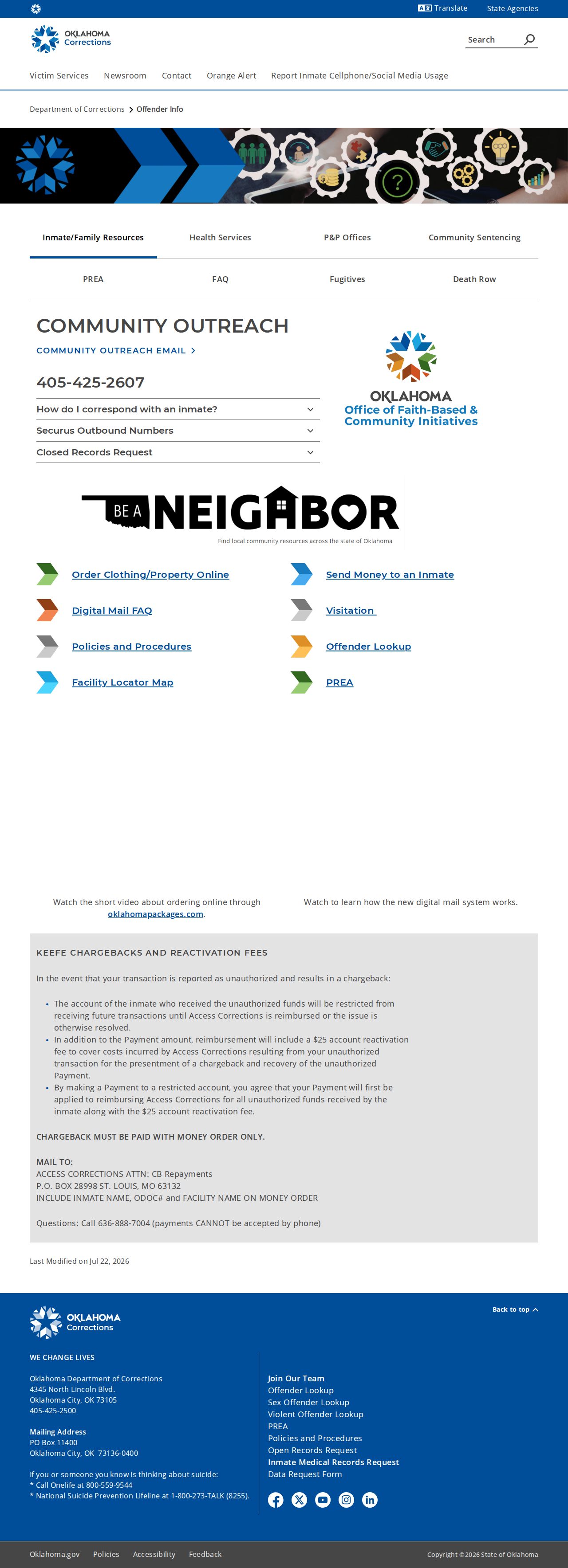
The warning prevents an exact public-date promise. Verify release only after the agency status and custody record reflect the completed event.
Oklahoma Corrections Parole and Discharge
The Oklahoma Pardon and Parole Board conducts parole consideration, while ODOC supervises parolees after release. Monthly dockets and results can show the DOC number, county, case, offense, sentence, parole eligibility date, PRD, hearing type, action, and processing details. A favorable outcome can still be followed by conditions, Governor action where required, a detainer, release planning, misconduct, or a sentence audit.
“Parole to detainer” does not mean the person entered the community. It may send the person to another agency. A parolee also remains under ODOC control for the unserved part of the sentence. Discharge is the different endpoint shown when the state-administered obligation ends. State the exact public status rather than saying that every charge or case is over.
Eligibility does not guarantee parole. For offenses covered by 21 O.S. §13.1, the operative statute can require at least 85 percent of imprisonment before consideration. The offense date and statutory version matter, and the rule does not make the threshold an automatic exit date.
Oklahoma Corrections Release Records
ODOC provides a public open-records form for releasable state material. A narrow request can identify the full name, date of birth, DOC number, Wagoner County case number, and date range, then ask for the commitment or reception record, public status history, actual release or discharge date and type, sentence discharge documentation, and latest releasable ODOC photograph.
Do not demand a confidential future date as though open-records law overrides ODOC's stated restriction. Ask for segregable public material and the legal basis for any withheld part. General Counsel is listed at 405-425-2515. Closed Records is 405-425-2691. The address osordischarges@doc.ok.gov is designated for discharge inquiries, but it is a routing channel rather than blanket access permission.
General Counsel: 405-425-2515
Closed Records: 405-425-2691
Discharges: osordischarges@doc.ok.gov
For an error in an individual's corrections history, ODOC separately publishes forms 060212B through 060212D for review and challenge. That correction route is distinct from a public records request.
The state record may include an ODOC number, physical descriptors, aliases, a corrections photograph, facility or status information, sentence data, and dates. Actual content varies. An ODOC portrait is a state corrections image, not automatically the booking photograph created at Wagoner County Jail. Request the original county image from WCSO under the booking number instead of treating the state portrait as the same record.
Wagoner Custody Before Oklahoma Corrections
Wagoner County has more than one local custody path. The City of Wagoner Police Communications/Corrections Division maintains a separate city jail. Coweta's published agreement documents use of Wagoner County Jail for some municipal prisoners when space is available. Broken Arrow operates a municipal jail and spans Tulsa and Wagoner counties. The WCSO 72-hour release feed is therefore not a universal account of every municipal custody event.
A municipal prisoner may never enter ODOC at all. Conversely, a felony defendant can move from a city or county setting into the state system after judgment. Identify the arresting agency, court, actual custodian, and transfer destination. Use the municipal docket for city legal action, WCSO for county custody timestamps, and ODOC only when a state commitment or supervision record exists.
OK VINE can bridge county and state custody because Oklahoma sources describe county-jail and ODOC participation. A custody update can support a transfer trail, but it is not a judgment or discharge certificate. State sex and violent offender registries are narrower still. They cover only people with a statutory registration duty and are not general prison-release lists.
Verify Oklahoma Corrections Release Destination
A public ODOC status can establish that state custody or supervision is active or historical, but a single label may not identify the destination. Pair it with the court judgment, Board result, VINE custody change, and requested release or discharge record. If another agency took custody, follow that system before describing a community release.
The Wagoner County released-inmate search supplies the local release-record route for the custody event before ODOC. When the county card says released because of transfer, the state lookup resolves what followed. When ODOC later shows parole or discharge, the state record becomes the primary release source.